Inclusive Development for
Our Global Future
Best-selling author and speaker Mayada El-Zogbhi explains how we can achieve an inclusive and equitable digital economy.

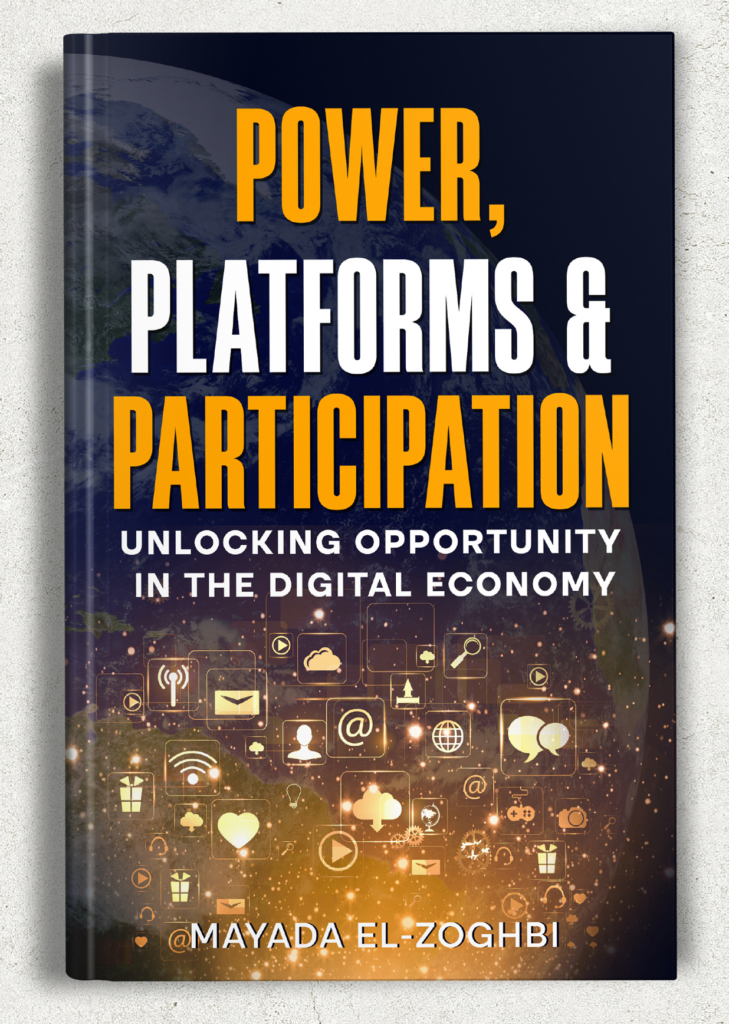
Power, Platforms & Participation
Unlocking Opportunity in the the Digital Economy
This book is about what it takes to ensure that all people are able to participate in the digital economy. It opens with explaining what a digital economy is, goes into the importance of digital finance as a key enabler for the digital economy, and then discussed which groups are being left behind. It then goes into what can be done to ensure there is greater opportunity and a level playing field for different groups in society. Various chapters cover the role of the private sector, public sector, civil society and development donors.
Mayada El-Zoghbi has spent more than two decades at the intersection of technology, social impact, and global development. With nearly 11 years at the World Bank and 6 years leading development think thanks, she has worked across Africa, Asia, Latin America, the Middle East, and Europe to harness innovation for inclusive growth. Through her research on technology and its applications in inclusive finance, health, and agriculture, Mayada has become a leading voice on how technology can expand opportunity – or deepen inequality. Drawing on an extensive global network in philanthropy, development cooperation and the private sector, she brings a grounded perspective on how to shape the digital economy that balances the power of platform businesses with their merchants and users and creates opportunities for historically excluded segments in society.
What Is Inclusive Finance and Why is It Needed for Inclusive Development?
Inclusive finance is a financial system that serves all — low income people, small businesses, higher income segments and corporates. Because the financial system is critical for fueling investment in the real economy, we must start with ensuring that a financial system serves all stakeholders if we want an inclusive economy.
Building an inclusive financial system requires sound policy, but also action by other stakeholders like donors, investors, companies, and individuals.
Inclusive finance should not be confused with financial inclusion, which seeks to expand access to financial services for the underserved. Access is insufficient for equity and inclusion. An inclusive financial system goes beyond access and ensures that the system itself is able to deliver safe, responsible, and quality financial services that meet the needs of individuals and firms.
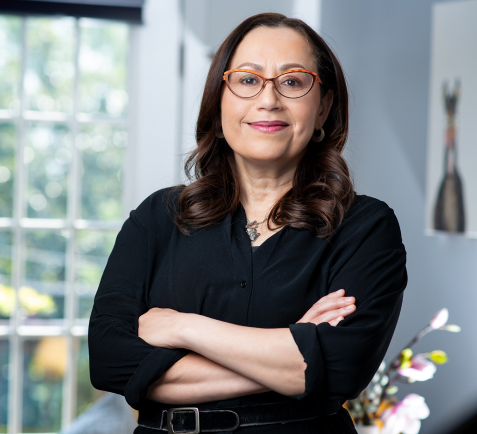
Mayada El-Zogbhi · Inclusive Finance Leader
Mayada is an economic development leader with more than 20 years of experience promoting inclusive finance in developing economies. She is a thought leader, author, and public speaker. She works with development organizations and policymakers to support their strategies, programs and policies.

Work With Mayada
Mayada has appeared at speaking engagements and partnered with development organizations and policymakers all over the world.
Resources
Read the latest insights from Mayada as well as her recommended resources to stay up to date with advancing financial inclusion.
Recommended Industry Resources
Mayada’s Articles & Insights
Digital Evolution Index
Digital Progress and Trend Report
The Global Findex Database
HerMoney, HerAccount, HerFuture
Be careful what the neighbors might think
Digital ID Systems: The Promises and Pitfalls
How do you know whether your policy is inclusive?
Many people assume financial policies are neutral—designed without recognizing the specific barriers, endowments, or capabilities of different segments of society. While they may not intend to exclude, policies and other tools, such as digital technology, that aim to reach all people may unintentionally exclude individuals based on gender, age, disability, race, or country of origin. Take this quiz to get a better understanding on if your policy is inclusive.